
The right preschool should meet your child’s developmental needs and fit your family’s daily routine. When comparing preschools in Singapore, look beyond location and fees. Ask how the programme works in practice, who will care for your child, how the centre manages safety and how families receive information.
Enrolment and tour arrangements differ across preschool operators. At E-Bridge, families are invited to tour the centre after a place has been offered. The tour allows families to understand the environment, clarify operational arrangements and decide whether to accept the offered place.
This guide explains ten questions that can help you compare options and make an informed decision.
What Parents Should Consider First
- Choose a programme type and location that your family can sustain each day.
- Ask for examples of how the curriculum appears in children’s daily experiences.
- Consider how educators organise the day to support children during learning experiences, meals, rest and transitions
- Review safety, illness, meal, allergy and emergency procedures before enrolment.
- Clarify fees, subsidies, deposits, notice periods and other enrolment terms.
- Ask how educators build secure relationships with children and support their needs throughout the day.
Questions to Consider When Choosing a Preschool
1. What Type of Preschool Programme Does My Family Need
Start with the practical requirements that will shape your child’s routine. In Singapore, infant care generally serves children from two to 18 months, while childcare serves children from 18 months to 6 years. Available programmes, operating arrangements and vacancies vary across different operators.
Consider travel time during peak hours, who will handle drop-off and collection, and whether the operating hours match your work and caregiving arrangements. A suitable programme can still become difficult for the family if the daily journey is not sustainable.
What to ask or observe
- Which age groups and programme types does this preschool offer
- What are the operating hours and closure dates
- How does the operator manage registration of interest and placement offers
- How does the preschool support a child during the settling-in period
2. How Does the Curriculum Support My Child's Development
A curriculum philosophy matters when educators can explain how it shapes the day. Ask how the preschool supports language, thinking, physical development, creativity and social-emotional development through age-appropriate experiences.
Request concrete examples. A preschool should be able to explain what children might investigate, how educators extend their thinking and how learning is documented. This helps you distinguish a stated philosophy from what children experience in the classroom.
E-Bridge Pre-School offers a Reggio Emilia-inspired inquiry-based curriculum that views children as capable learners. Educators use guided inquiry, purposeful play, discussion and different forms of expression to help children explore ideas and build understanding.
What to ask or observe
- What does a typical day look like for my child’s age group
- How do educators respond to children’s interests and questions
- How are literacy, numeracy and other learning areas introduced
- How do educators document and assess children’s learning

3. How Does the Preschool Balance Inquiry-Based Learning and School Readiness
School readiness involves more than worksheets or early academic instruction. Children also need communication skills, independence, self-regulation, confidence in group settings, and the ability to ask for help. A strong preschool programme develops these capacities together with early literacy and mathematical thinking.
Ask how educators plan intentional learning while allowing children to investigate ideas, make choices and learn through play. For older preschoolers, find out how the programme supports the transition to Primary 1 without placing unnecessary pressure on children.
What to ask or observe
- How does the programme build early literacy and mathematical thinking
- How are independence and self-care encouraged
- How do educators help children listen, collaborate and manage emotions
- What support is provided for the transition to primary school

4. How Are English and Mother Tongue Languages Taught
Meaningful language learning happens when children hear and use language in context. Ask which Mother Tongue Languages are available, how often children encounter each language and how educators adapt experiences for children with different levels of confidence.
Look for language use in stories, conversations, songs, routines, play and cultural experiences. Dedicated language educators can support listening, speaking and early literacy while helping children connect language with daily life.
At E-Bridge, multilingual learning supports children in building confidence in English and their Mother Tongue Language. Families should check the language provision available at their preferred centre.
What to ask or observe
- Which Mother Tongue Languages does this centre offer
- Who teaches each language and how is learning planned
- How is language used beyond a scheduled lesson
- How will educators support a child who is new to the language
5. Who Will Teach and Care for My Child
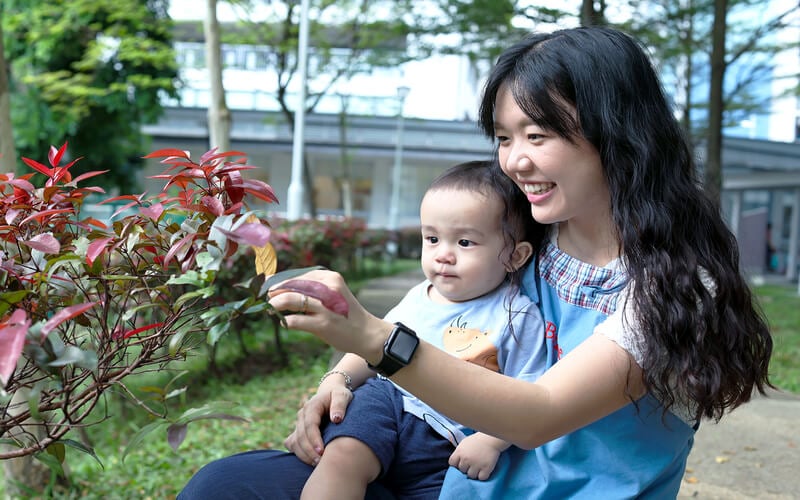
Find out how educators listen to children, respond calmly, explain boundaries and help children participate at their own pace.
Ask about professional development, coaching and curriculum support. Consistent practices and clear routines help children feel secure and enable educators to respond to individual needs.
E-Bridge invests in continuing professional development and works with educators from Reggio Children to deepen curriculum practice. Centre teams can explain how professional learning informs their work with children.
What to ask or observe
- What qualifications and experience do the educators have
- What professional development do educators receive
- How do educators build secure relationships and understand each child’s needs
- How are children supported consistently across daily routines
6. How do educators support children throughout the day?
Preschools in Singapore must meet ECDA’s staff-child ratio requirements, which vary according to the children’s age group. Ask how educators organise routines, learning experiences and transitions to support children safely and meaningfully.
Find out how educators support children during group and individual experiences, meals, rest, outdoor play and transitions. These everyday arrangements provide a clearer view of how the programme works in practice.
What to ask or observe
- How are daily routines organised for my child’s age group
- How do educators support children during meals rest and transitions
- How are small-group and individual learning experiences facilitated
- How are children supported consistently across daily routines
7. How Does the Preschool Share My Child's Learning and Well-being
Regular communication helps families understand how their child is adjusting, participating and developing. Ask what information educators share, how often they share it and how families can raise questions or concerns.
Useful communication goes beyond photographs of activities. It should help parents understand what their child did, what educators observed and what the experience may mean for the child’s development. Families should also know how the preschool communicates urgent operational or health matters.
What to ask or observe
- How will I receive daily or regular updates
- How often are progress discussions held
- How will educators discuss a developmental or behavioural concern
- Who should I contact about classroom and operational matters
8. How Does the Centre Manage Safety Health Meals and Emergencies
Ask how the preschool prevents foreseeable risks and how it responds when an incident occurs. Relevant areas include authorised collection, supervision, safeguarding, illness management, first aid, emergency procedures, food safety and allergy controls.
Parents should also disclose medical conditions, allergies and dietary requirements accurately so the preschool can discuss the support it can provide.
No preschool can promise that incidents will never occur. Clear procedures, trained staff, timely communication and documented follow-up show how the preschool manages its responsibilities.
What to ask or observe
- How are arrival collection and visitor access controlled
- What are the illness exclusion and parent notification procedures
- How are food allergies medication and dietary needs managed
- What first-aid and emergency arrangements are in place
9. How Will the Preschool Support My Child's Individual Needs
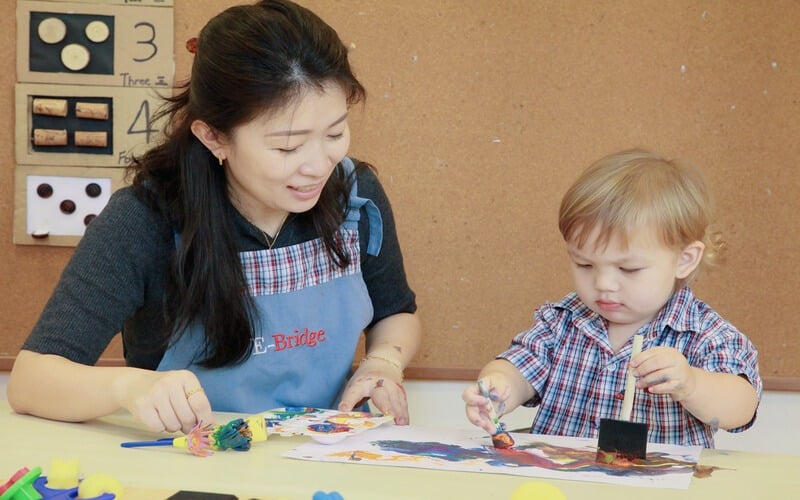
Children enter preschool with different temperaments, experiences, interests and developmental needs. Ask how educators learn about your child, adapt experiences and work with families when additional support may be helpful.
If your child is offered a place and your family is invited to tour the centre, review whether the spaces and materials allow different forms of participation. Ask how educators support separation, communication, peer relationships and transitions between activities. If your child has an identified medical, developmental or learning need, discuss the centre’s capabilities before accepting the place.
What to ask or observe
- How will educators learn about my child’s routines interests and needs
- How are learning experiences adapted for different levels of development
- How does the centre respond when a child needs additional support
- How will the centre work with our family and relevant professionals
10. What Fees Subsidies and Enrolment Terms Should I Check
Compare the full cost of enrolment, not only the monthly fee. Ask about registration charges, deposits, uniforms, meals, enrichment activities and any other compulsory or optional costs. Clarify when fees may change and what happens during absences or centre closures.
Eligible Singapore Citizen children may receive preschool subsidies. The amount depends on the applicable government criteria and the family’s circumstances. Ask the preschool what documents are required and refer to current official guidance before making financial plans.
Read the enrolment terms carefully. Check the notice period for withdrawal, refund conditions, start-date arrangements and how the deposit will be applied or returned.
What to ask or observe
- What is the total monthly and one-off cost
- Which government subsidies or financial support may apply
- What deposit and withdrawal notice are required
- What happens to fees during absence or closure
What to Consider During an Invited Centre Tour
E-Bridge invites families to tour the centre after a place has been offered to their child. During the tour, review the environment, daily routines and practical arrangements for your child’s age group. The centre team can also explain the programme and answer questions before you decide whether to accept the place.
Consider the following:
- How are arrival, collection and visitor access managed?
- How are the learning and care spaces organised for my child’s age group?
- What are the daily routines for meals, rest, learning and outdoor experiences?
- How will the centre support my child during the settling-in period?
- What should our family prepare before the child’s first day?
Frequently Asked Questions
How early should I start looking for a preschool in Singapore
Register your interest when you have identified a preferred location and are ready to consider an available intake. Waiting times vary by operator, centre, programme level and neighbourhood, and may be longer in high-demand areas. Registration of interest does not guarantee placement or a particular start date. Waiting times and availability may change, so E-Bridge cannot provide an estimated placement date. The centre will contact you if a suitable place becomes available.
How can I check whether a preschool is licensed
Use the LifeSG Preschool Search to look for preschools and review available service information. You can also ask the preschool to explain its licence class, approved services and age groups. A licence confirms that the preschool operates within the regulatory framework. Parents should still assess the programme, interactions and fit for their child.
How important is SPARK accreditation
SPARK is ECDA’s quality assurance framework for Singapore preschools. Accreditation can provide useful information about a centre’s practices, but it should form one part of your decision. Consider your child’s needs, educator-child interactions, staffing, programme, environment and operational arrangements. Check the status of the specific preschool you are considering.
What should I prepare before an invited centre tour?
If your child is offered a place at E-Bridge, the centre will invite your family for a tour. Before attending, consider whether your family can accept the offered intake date. Prepare questions about operating hours, language provision, daily routines, meals, medical or dietary needs and settling-in arrangements. An offered place is tied to the available intake and may not be held for a later start.
Is a preschool near home always the best choice?
A nearby preschool can make daily travel easier, but distance is not the only consideration. Compare the programme, educator interactions, operating hours, fees and suitability for your child. Test the journey at the times you expect to travel before deciding.
Choosing the Right Preschool for Your Family
Compare preschool programmes, locations, operating arrangements and fees against your child’s needs and your family’s routine. Once you identify a suitable E-Bridge centre, register your interest early. Waiting times vary by centre, programme level and location.
If a suitable place becomes available, E-Bridge will contact you with the offered intake date and invite you to tour the centre. Places are offered for a specific intake and may not be held for a later start.
E-Bridge Pre-School is an ECDA-appointed Anchor Operator and part of EtonHouse International Education Group. Our centres offer infant care and childcare programmes across Singapore, supported by a Reggio Emilia-inspired inquiry-based curriculum and multilingual learning. Register your interest to be considered when a suitable place becomes available.