
Key Takeaways
- Healthy eating habits in preschoolers are built through small, consistent routines rather than perfect meals.
- Regular mealtimes at home and at preschool help children develop a natural appetite and feel more settled during meals.
- Repeated, low-pressure exposure to a variety of foods helps children become more open to trying new options.
- Making food visually appealing and involving children in simple preparation can increase interest in meals.
- Positive role modelling from adults encourages children to develop a balanced and confident approach to eating.
Introduction
Between work, school routines, and everything else in your day, mealtimes can start to feel like another task to get through. You might wonder if your child is eating enough, why vegetables are often pushed aside, or why snacks seem to be requested throughout the day. However, encouraging healthy eating for preschoolers often begins with small, steady habits that fit naturally into their everyday routine.
Why Healthy Eating is Important for Preschoolers
Supports Physical and Brain Development
During the preschool years, your child’s body and brain are developing quickly. Nutrients such as protein, healthy fats, iron, and calcium support muscle growth, bone strength, and brain function. They also help children build coordination, develop language skills, and stay engaged in everyday experiences such as play, communication, and learning.
Builds Strong Immunity and Supports Long-Term Health
A consistent intake of fruits, vegetables, whole grains, and protein provides your child with the vitamins and minerals needed to support a healthy immune system. This helps them better cope with common illnesses such as colds and infections. Over time, balanced eating habits may also reduce the likelihood of developing diet-related conditions, such as high blood pressure and diabetes, later in life.
Encourages Healthy Growth and Weight Balance
When children eat regular, balanced meals, their bodies learn to regulate hunger and fullness more naturally. This supports steady growth without relying on excessive snacking or highly processed foods. Establishing these patterns early helps children maintain a healthy weight as they grow, without the need for strict restrictions.
Supports Mood, Focus, and Daily Learning
Food affects how your child feels and functions throughout the day. Healthy meals that include a mix of carbohydrates, protein, and healthy fats provide steady energy, helping children stay focused and regulate their emotions more easily. This can make a noticeable difference in how they participate in preschool routines and social interactions.
Builds Lifelong Habits
Children learn about food through repeated, everyday experiences. When mealtimes are calm, consistent, and positive, children begin to see healthy eating as something familiar and enjoyable. These early habits often continue into later childhood and adulthood, supporting long-term wellbeing.
How to Encourage Healthy Eating Habits in Preschoolers
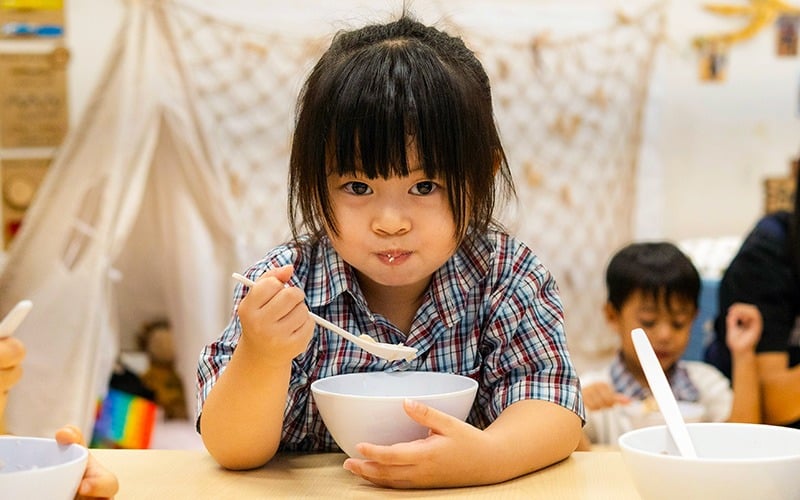
Getting your child to eat well often takes time, patience, and a little creativity. It is common for preschoolers to go through phases where they prefer familiar foods or hesitate to try something new. Rather than expecting immediate changes, focus on small, consistent steps that make mealtimes feel positive and low-pressure.
Create Consistent Mealtime Routines
Setting regular times for meals and snacks gives your child a clear sense of what to expect throughout the day. When meals follow a predictable rhythm, children are less likely to constantly ask for food and more likely to come to the table ready to eat. It also helps them stay seated, focus on their meal, and be more open to trying what is served, rather than feeling distracted or disinterested.
Many preschools in Singapore integrate mealtimes into the daily schedule. At E-Bridge Pre-School, children eat together at set times, helping them develop a natural rhythm while experiencing mealtimes as enjoyable social occasions. Bringing a similar structure into your home can help reinforce these habits in a consistent and reassuring way.
Introduce a Variety of Nutritious Foods
Children often need time to warm up to new foods, and it is normal for them to prefer what feels familiar. Instead of expecting immediate acceptance, try offering a variety of fruits, vegetables, grains, and protein-rich foods in small, manageable portions. Seeing the same foods appear regularly, without pressure to eat them, helps children become more comfortable over time.
You can also pair new foods with something your child already enjoys. For example, serving a new vegetable alongside a familiar dish can make it feel less overwhelming. A varied preschool meal plan also gives children regular opportunities to experience different flavours and textures, helping them build familiarity and confidence with a wider range of foods over time.
Make Healthy Eating Look More Appealing for Preschoolers
How food looks and feels can make a big difference to a young child. Bright colours, varied textures, and simple presentation can make balanced meals more inviting for preschoolers. Small touches, such as cutting fruit into easy-to-hold pieces or arranging food neatly on the plate, can encourage children to explore what is in front of them.
Involving your child in simple meal preparation can also spark interest. Letting them wash vegetables, place ingredients on a plate, or help set the table gives them a sense of involvement. These small moments can shift mealtimes from something they resist to something they enjoy being part of.
Model Positive Eating Behaviours
Children pay close attention to what adults do. When they see you enjoying a variety of foods and approaching meals calmly, they are more likely to follow your example. Sitting down together, eating the same foods, and showing curiosity about different flavours all help shape how your child responds.
It also helps to keep the tone around food relaxed. Encouraging your child without forcing them to eat allows them to listen to their own hunger cues. Over time, this builds confidence and trust, helping them develop a more natural and balanced approach to eating.
Supporting Healthy Eating for Preschoolers at E-Bridge Pre-School
If you are looking for a preschool that supports your child’s wellbeing beyond the classroom, mealtimes are an important part of the experience. At E-Bridge Pre-School, we provide nutritious, balanced meals each day, giving children a consistent and supportive mealtime environment that complements their learning and development.
Breakfast, lunch, and tea breaks are provided each day, giving children regular opportunities to enjoy meals as part of their daily routine.
Find out more about E-Bridge Pre-School and how we support children’s learning, development, and wellbeing. Contact us us to learn more.