
Key Takeaways
- Childcare services in Singapore include infant care, childcare centres, and kindergartens, each designed to support different age groups and developmental needs.
- Curriculum approaches such as Reggio Emilia, Montessori, and the Nurturing Early Learners (NEL) Framework offer varying levels of structure, independence, and inquiry-based learning.
- When visiting a centre, pay attention to educator-child interactions, the learning environment, and how daily routines are managed.
- Choosing the right childcare service means finding one that supports your child’s development while fitting your family’s needs and routine.
Introduction
Many parents in Singapore begin exploring childcare when work schedules change or when they need consistent daily support. With a wide range of services available, from infant care to kindergarten, it can be challenging to determine which setting best meets your child’s needs. This guide explores the different early childhood education options in Singapore, common curriculum approaches, and key factors to consider, helping you make a more informed and confident choice for your child.
Types of Preschool Programmes in Singapore
Infant Care Programmes (2–18 months)
Infant care programmes in Singapore are designed for young children who require close attention, responsive care, and consistent routines throughout the day. A typical programme includes feeding, naps, diaper changes, and sensory play, with educators following each child’s individual routine as closely as possible, particularly during the early months.
With smaller class sizes and lower educator-to-child ratios, infant care programmes provide personalised attention during this important stage of development. Parents can also expect regular updates on their child’s feeding, sleep, and overall well-being, offering reassurance as they transition back to work while knowing their child’s daily needs are being met in a safe, nurturing environment.
Childcare Centres (18 months to 6 years)
Childcare centres offer a structured daily routine that balances care, play, and early learning. Most full-day programmes run from morning to late afternoon and include meals, rest time, guided learning experiences, and opportunities for free play.
Children are grouped according to their age and developmental stage, with daily activities that may include storytelling, early numeracy, creative expression, and outdoor play. During this stage, they also begin to develop important social and emotional skills, such as sharing, taking turns, and communicating with peers.
Childcare centres are well suited for families who require full-day care while providing children with opportunities to learn, explore, and build confidence in a supportive environment.
Kindergarten Programmes (K1–K2)
Kindergarten programmes are typically half-day and place greater emphasis on preparing children for primary school. Children follow a structured timetable that introduces early literacy, basic mathematics, and communication skills through age-appropriate learning experiences. Lessons are often shorter and more focused, helping children develop the ability to listen, participate, and complete simple tasks independently. There is also an emphasis on routines such as lining up, following instructions, and working collaboratively with others.
Some families may prefer a standalone kindergarten if they are looking for a more structured, half-day programme. Others may choose a preschool that offers a continuous pathway from infant care or childcare through to K1 and K2, allowing children to learn and grow in a familiar environment with consistent routines and relationships.
Common Childcare Approaches and Curricula in Singapore
While daily routines may appear similar across centres, the curriculum shapes how children learn, explore, and interact with the world around them. Understanding the different approaches can help you choose a setting that aligns with your child’s interests, learning style, and developmental needs, while also reflecting your family’s values and expectations.
1. Reggio Emilia Approach
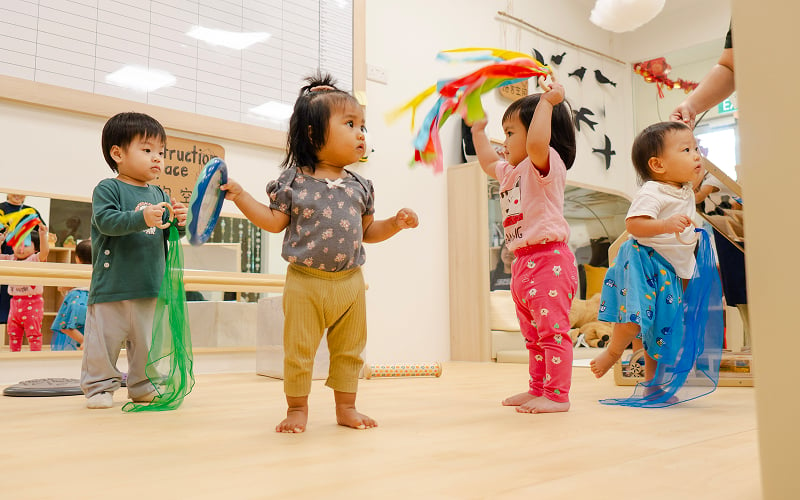
The Reggio Emilia approach is founded on the belief that children are capable, curious, and active participants in their own learning. Rather than following a fixed curriculum, educators build learning experiences around children’s interests, questions, and ideas.
In practice, this often takes the form of project-based learning. For example, a child’s interest in plants may develop into an inquiry that includes drawing, storytelling, outdoor observations, and group discussions. Instead of focusing on a single “right answer”, the emphasis is on exploration, collaboration, critical thinking, and expressing ideas in meaningful ways.
This approach is well suited to children who enjoy asking questions, exploring their interests, expressing themselves creatively, and learning through open-ended experiences.
2. Montessori Approach
The Montessori approach emphasises structured independence, with the belief that children learn best in a calm, orderly environment where they can explore at their own pace using carefully designed learning materials.
In a Montessori classroom, children often work independently with hands-on materials that introduce one concept or skill at a time, such as counting beads, matching objects, or practical life experiences. They are encouraged to repeat these learning experiences until they gain confidence and mastery. Educators observe and guide when needed, allowing children to develop concentration, independence, and self-discipline.
This approach is often well suited to children who enjoy routine, prefer working independently, and thrive in a structured learning environment.
3. MOE Nurturing Early Learners (NEL) Framework
Many preschools in Singapore draw on the Ministry of Education’s NEL framework, which provides a balanced approach to early childhood education through purposeful play and guided learning. Throughout the day, children may participate in learning experiences that support language and literacy, early numeracy, music and movement, as well as physical development. These learning experiences are planned with clear learning objectives and delivered in engaging ways through stories, games, and collaborative exploration.
The NEL Framework is well suited to families looking for a balanced programme that supports children’s holistic development while preparing them for primary school.
Key Factors to Consider When Choosing Childcare in Singapore
Once you understand the different programme options and curriculum approaches, the next step is comparing individual centres. Choosing the right childcare in Singapore often comes down to how well a centre supports your child’s development while fitting your family’s needs and daily routine.
1. Educator Qualifications and Interactions
The way educators interact with children often has a greater impact than what is described in a brochure. When visiting a centre, observe how educators communicate with children, respond to their needs, and guide them through everyday situations. Warm, responsive interactions help children feel safe, build confidence, and settle more comfortably into a new environment.
At E-Bridge Pre-School, our educators take a responsive approach by observing each child closely and building trusting relationships that support both emotional well-being and learning. They are professionally trained and continue to deepen their practice through ongoing professional development, in-class coaching by experienced pedagogists, and exposure to international best practices. This enables them to create meaningful learning experiences that respond to each child’s interests, strengths, and developmental needs.
2. Learning Environment and Facilities
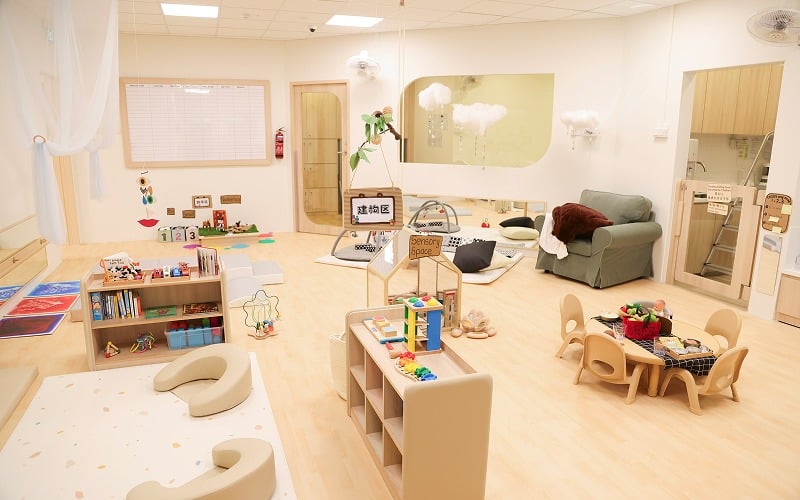
The physical space environment offers valuable insight into your child’s daily experience. Look for classrooms that are organised yet adaptable, with learning materials that children can access independently. Spaces that support movement, creativity, collaboration, and quiet reflection encourage children to explore, learn, and engage in different ways throughout the day.
At E-Bridge Pre-School, our classrooms feature distinct, Reggio Emilia-inspired learning areas that encourage exploration, independence, and collaboration. Designed to support meaningful learning experiences, these spaces provide children with opportunities to investigate their interests, make choices, and learn alongside their peers in a safe, welcoming environment.
3. Regulation and Standards
Choosing a centre that meets recognised standards for safety and quality is an important consideration. In Singapore, licensed preschools are regulated by the Early Childhood Development Agency (ECDA) and are required to meet standards relating to educator qualifications, staff-to-child ratios, health and safety practices, and programme quality.
As an ECDA Anchor Operator, E-Bridge Pre-School is committed to providing quality early childhood education while keeping preschool fees affordable and accessible for families. This gives parents added confidence that their child is learning in a safe, well-supported, and nurturing environment.
Conclusion
Choosing a childcare setting in Singapore goes beyond finding one that fits your family’s schedule. It is about understanding how your child will spend each day, who will guide their learning, and how they will grow through meaningful learning experiences.
At E-Bridge, we provide accessible, quality early childhood education that nurtures children’s curiosity, confidence, and love for learning. As part of the EtonHouse International Education Group, our Reggio Emilia-inspired, guided inquiry-based curriculum empowers children to explore their interests, build strong relationships, and develop the skills they need to thrive.
Visit one of our centres to discover how our approach can support your child’s learning and development.