
Key Takeaways
- Singapore offers both Basic and Additional subsidies to help reduce childcare costs for eligible families.
- Eligibility for the preschool subsidy depends on factors such as citizenship, gross household income, employment status, and the type of preschool programme.
- Parents enrolled in eligible infant care or childcare programmes can receive subsidies directly through their preschool fees.
- Applications are usually completed after enrolment, with most centres guiding families through the process.
- Understanding available financial support early can help parents make more confident decisions about their child’s early years of education.
Introduction
For many families, early childhood education is one of the first major financial commitments after welcoming a child. Between infant care, childcare, and external enrichment needs, managing monthly expenses can quickly become overwhelming.
The Singapore Government provides financial support to help families access quality infant care and childcare through subsidies administered by the Early Childhood Development Agency (ECDA). These preschool subsidies help reduce monthly fees, making early childhood education more affordable for families across different income groups.
Types of Preschool Subsidy in Singapore
Singapore currently offers two main forms of financial support for children under the Infant and Childcare Subsidy Scheme. Both subsidies are credited directly to the preschool, so parents only need to pay the remaining fees after the subsidies have been applied.
Basic Subsidy
The Basic Subsidy is available to Singaporean children enrolled in ECDA-licensed infant care or childcare programmes.
For families applying under the working-parent category, the mother or single father must work at least 56 hours per month. This includes part-time employment, freelance work, self-employment, and flexible work arrangements. Parents who are not currently employed may still qualify for a lower subsidy tier, subject to ECDA’s assessment and approval.
This subsidy helps reduce monthly preschool fees across ECDA-licensed infant care and childcare programmes, including centres under the Anchor Operator scheme.
Additional Subsidy
Families who require additional financial assistance may also qualify for the Additional Subsidy, which provides further support in addition to the Basic Subsidy.
To be eligible, the main applicant must meet the same 56-hour monthly work requirement. In addition, the household’s gross monthly income must not exceed $12,000.
Families with larger households may also be assessed under the per capita income (PCI) framework. If there are five or more related family members living at the same address, households with a PCI of $3,000 or below may still qualify even if their total gross household income exceeds the standard income ceiling.
How Much Support Can Families Receive?
The exact preschool subsidy that families can receive depends on factors such as gross monthly household income, the child’s age, and whether the child is enrolled in infant care or childcare programmes.
For full-day infant care programmes serving children aged 2 to 18 months, families may receive:
- Basic Subsidy of up to $600 per month
- Additional Subsidy of up to $706.15 per month for eligible lower-income working families
For full-day childcare programmes serving children aged 18 months to 6 years, families may receive:
- Basic Subsidy of up to approximately $300 per month
- Additional Subsidy of up to approximately $361.90 per month
How Household Income Is Assessed
To determine eligibility for subsidies and calculate the level of financial support a family may receive, ECDA assesses gross monthly household income through the Household Means Eligibility System (HOMES).
This assessment typically takes into account:
- Gross monthly household income
- Number of family members living in the same household
- Per capita income, where applicable
The system helps ensure that subsidies are distributed based on each family’s overall financial situation. For larger households, the PCI framework provides a more balanced assessment by accounting for the number of dependents in the home. This allows some middle-income families with multiple family members to continue qualifying for additional support even if their total gross monthly household income exceeds the standard income ceiling.
Preschool Fees Can Vary Between Centres
Parents should note that preschool fees vary depending on the operator, programme types, and services offered. For example, centres under the Anchor Operator scheme receive government funding to help keep fees more affordable while maintaining quality early childhood education. Understanding both the available subsidies and a preschool’s fee structure can help families make informed decisions that suit their needs and budget.
How to Apply for a Preschool Subsidy in Singapore
The subsidy application process usually begins after parents confirm their child’s enrolment at an eligible preschool or childcare centre. Most centres will guide families through each step of the application and advise them on the supporting documents required.
In general, parents will need to:
- Complete the enrolment and subsidy forms through official platforms such as LifeSG
- Submit employment details and supporting income documents
- Provide household information for means testing
- Wait for ECDA’s review and approval outcome
Once approved, subsidies are automatically credited to the preschool, and the reduced amount will appear in the family’s monthly fee statement.
Parents should prepare supporting documents early to avoid delays during enrolment periods, especially when applying for infant care placements where vacancies may be more limited.
Conclusion
Understanding how the preschool subsidy system works can help families make more informed decisions during an important stage of their child’s development. While preschool expenses can feel significant at first, available subsidies help reduce financial pressure and improve access to quality early childhood education across Singapore.
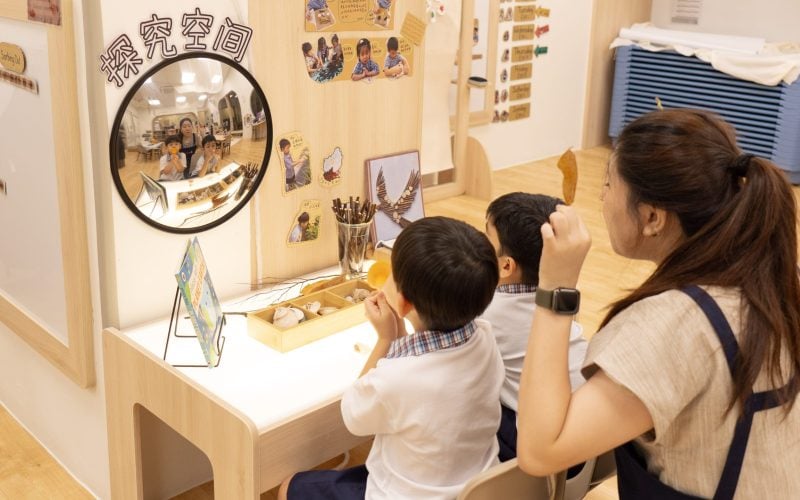
At E-Bridge Pre-School, we believe every child deserves access to quality early childhood education in a nurturing and inclusive environment. As an ECDA-appointed Anchor Operator and part of the EtonHouse International Education Group, we offer accessible preschool programmes in Singapore that combine affordability with our Reggio Emilia-inspired, guided inquiry-based curriculum to support children’s holistic development.
Speak with our team today to better understand enrolment pathways, subsidy eligibility, and available programmes for your child.