
Key Takeaways
- A positive learning environment shapes how children feel, explore, and develop confidence during their early years.
- At E-Bridge Pre-School, the environment acts as a “third teacher”, encouraging exploration, curiosity, and guided inquiry-based learning.
- Key elements include safe spaces, open areas for play, hands-on materials, supportive relationships, and outdoor learning experiences.
Introduction
Choosing a preschool in Singapore for your child often starts with practical questions. Is it near home? Does it fit your schedule? Yet for many parents, the bigger question comes later: will my child feel comfortable, confident, and happy here each day?
A positive learning environment plays an important role in shaping your child’s early experiences. It influences how they settle in, interact with others, and begin to make sense of the world around them. Over time, these everyday experiences help build confidence, curiosity, independence, and a love for learning.
Below, we explore the key elements of a positive preschool learning environment and how E-Bridge Pre-School brings them together to support every child’s growth and development.
Why a Positive Learning Environment Matters in the Early Years
In the early years, children are constantly learning from everything around them. The environment they are in plays a key role in shaping how they think, feel, and behave, both in the present and as they grow.
1. Supports Early Brain Development
Children’s brains develop rapidly in the early years as they observe, explore, and respond to their surroundings. A rich and supportive environment helps stimulate curiosity and encourages active learning through everyday experiences.
2. Shapes Confidence and Behaviour
When children feel safe and supported, they are more willing to try new things, ask questions, and interact with others. These daily experiences help them build confidence, develop social skills, and learn how to express themselves.
3. Prepares Your Child for Primary School and Beyond
These early experiences also support a smoother transition into primary school. Children who are used to exploring, making choices, and working with others tend to adapt more easily to new routines, participate confidently in group settings, and manage tasks more independently.
The Environment as a Third Teacher
At E-Bridge Pre-School, our curriculum is inspired by the Reggio Emilia approach, where the environment is seen as the “third teacher” alongside children and educators. Each space is intentionally designed to support children’s exploration, curiosity, and learning throughout the day.
This approach recognises children’s natural curiosity and learning potential. Rather than relying on instruction alone, children are given opportunities to explore, ask questions, and make sense of what they observe and experience. Through thoughtfully prepared environments and natural materials, they are able to engage at their own pace, revisit ideas, and build understanding through hands-on experiences.
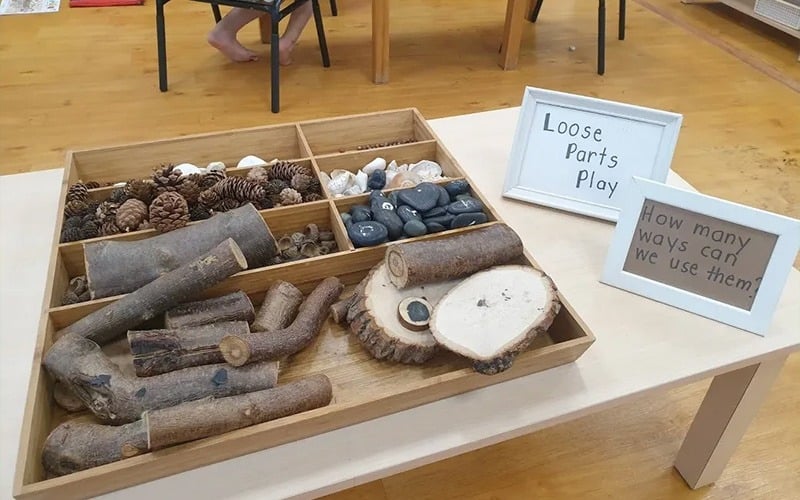
For example, a simple provocation (an open-ended, intentionally designed setup), such as a table set up with leaves, stones, and magnifying glasses, can invite children to observe textures, compare shapes, and ask questions about the natural world. Some children may sort and group the items, while others may create patterns or share stories about what they notice.
With guidance from educators, these small moments can grow into deeper conversations and learning experiences, making the environment an active part of how children think and discover.
Key Elements of a Positive Learning Environment for Preschoolers
1. A Safe and Welcoming Space for Children
A positive learning environment begins with a sense of safety and belonging. At E-Bridge Pre-School, educators create supportive spaces through consistent routines, responsive interactions, and meaningful relationships that help children feel secure from the moment they arrive.
Recognising each child as an individual, educators take time to understand children’s needs, interests, and pace of adjustment. When children feel safe, valued, and supported, they are more likely to explore with confidence, participate actively in learning experiences, and develop trusting relationships with peers and educators.
This sense of belonging plays an important role in the early years, supporting children’s emotional well-being, social development, and readiness to learn.
2. Spaces That Encourage Exploration and Play
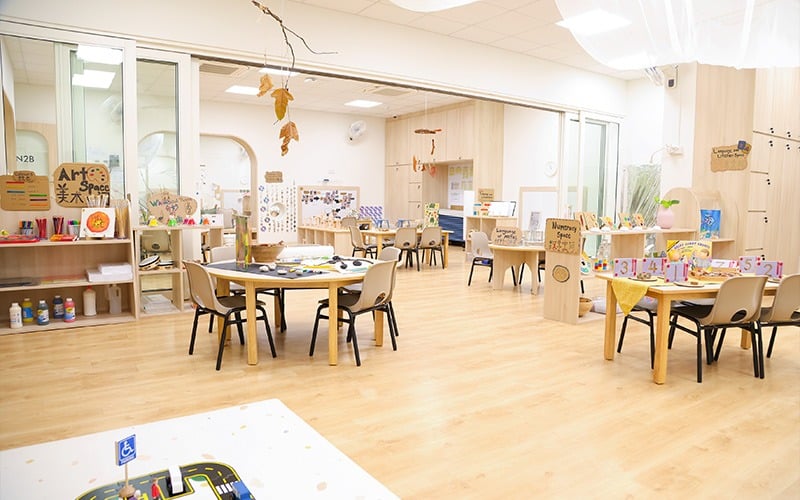
Classrooms are designed to feel open, warm, and inviting, helping children feel comfortable exploring from the moment they step in. Instead of a fixed layout, each space is intentionally organised into different learning areas that support different forms of exploration and play.
Common spaces include:
- A cosy reading corner with soft furnishings
- A creative art space with paints and natural materials
- A hands-on discovery area where children can build and experiment
Children can move between these areas based on their interests, encouraging active participation and curiosity. These spaces make exploration a natural part of daily experiences, helping children develop focus, creativity, and problem-solving skills.
3. Materials That Support Hands-On Learning
Beyond classroom design, the materials children interact with also play an important role in shaping their learning experiences. At E-Bridge Pre-School, classrooms include open-ended resources that encourage children to investigate, experiment, and express their ideas in different ways.
These may include:
- Building blocks
- Loose parts such as shells and wooden pieces
- Art materials such as paint and clay
- Sensory resources that encourage exploration through touch
Open-ended materials allow children to interpret and use resources in multiple ways. A set of blocks may become a structure, support imaginative storytelling, or contribute to a collaborative project. Art materials can also provide opportunities for children to represent their thoughts, emotions, and observations.
By engaging with flexible materials, children develop creativity, problem-solving skills, and the ability to approach ideas from different perspectives.
4. Positive Interactions With Educators and Peers
In the early years, relationships play an important role in shaping how children learn, communicate, and develop. Our educators build meaningful connections with children through conversations, shared experiences, and responsive guidance.
By listening closely and responding to children’s thoughts and ideas, educators create opportunities for children to express themselves, ask questions, and develop confidence in their learning. At the same time, interactions with peers through play and collaboration support the development of important social skills, including communication, cooperation, and empathy.
5. Opportunities for Outdoor Learning
A positive learning environment extends beyond the classroom. At E-Bridge Pre-School, some centres incorporate outdoor spaces as an extension of the learning environment, providing children with opportunities to explore, move, and engage with the world around them.
Through experiences such as nature walks, water play, and open-ended exploration with natural elements like sand, leaves, and stones, children develop curiosity, observation skills, and physical confidence. Outdoor experiences also encourage independence, collaboration, and problem-solving, creating a balanced learning experience that supports children’s holistic development.
E-Bridge Pre-School: Supporting Your Child’s Early Learning Journey
Choosing a preschool or kindergarten where your child feels comfortable, supported, and encouraged to explore is an important part of their early years. A positive learning environment helps shape these early experiences, building confidence, curiosity, and independence that support children as they continue to grow.
At E-Bridge Pre-School, we bring together intentionally designed spaces, meaningful materials, and strong educator-child relationships to support each child’s development. Guided by a belief in every child’s unique potential, we create opportunities for children to express themselves, explore their interests, and grow at their own pace.
To learn more about our learning environments and centres, contact us today.