
Key Takeaways
- The early years are where children begin developing important life skills that shape how they think, interact, and respond to the world.
- Developing life skills early helps children build confidence and approach new situations with greater ease and curiosity.
- Preschool provides daily opportunities for children to practise communication, cooperation, and problem-solving through real interactions.
- Consistent routines help children develop good habits, responsibility, and independence in everyday tasks.
- With guidance from educators, children also learn to adapt to change and build resilience, preparing them for school and life beyond.
Introduction
Every parent hopes to see their child grow into someone confident, capable, and comfortable in their own skin. It is not just about doing well in school, but about feeling secure enough to try new things, express themselves, and navigate everyday situations with ease. These are essential life skills that children develop in the early years through everyday experiences that may seem simple yet carry lasting meaning.
Below, we explore five important life skills that your child develops in preschool.
Why Children Should Develop Important Life Skills Early
Early childhood, from birth to around eight years old, is a critical period when children begin to make sense of the world around them. What they learn at this stage shapes how they form friendships, face challenges, and adapt to new environments later on. Starting early gives children more time and opportunities to develop and strengthen these essential abilities.
Builds Confidence That Lasts
When children practise everyday skills early, they begin to trust their own abilities. Simple actions such as making choices, completing small tasks, or expressing their needs help them understand what they are capable of doing independently. Over time, this sense of confidence grows, making them more willing to try new experiences, share their ideas, and approach challenges with a positive mindset.
Forms the Foundation for Future Learning
Children who develop these skills early tend to adjust more easily to new learning environments. They are better able to follow routines, stay engaged, and adapt when situations feel unfamiliar. More importantly, they tend to approach learning with confidence and curiosity, focusing on trying, exploring, and improving rather than simply getting things right.
5 Important Life Skills Your Child Should Learn in Preschool
1. Communication and Expressing Ideas
Preschool is one of the best environments for children to develop essential communication and social skills. Surrounded by peers and trusted educators, your child has daily opportunities to express their needs, ask questions, and respond to others. These interactions naturally take place during play, group discussions, and shared learning experiences.
At E-Bridge Pre-School, our educators create a safe and supportive environment where children feel confident to communicate. They observe each child closely, listen to their ideas, and guide conversations using open-ended questions that encourage children to share more.
2. Cooperation and Teamwork
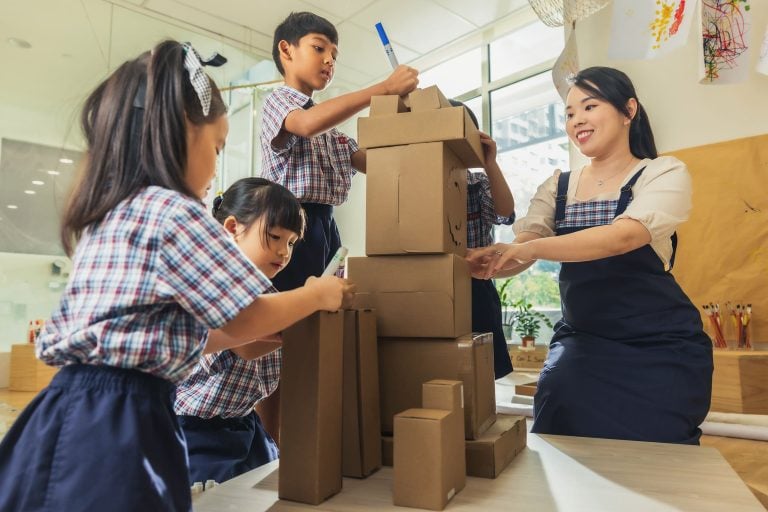
In addition to helping your child build communication skills, learning experiences such as group discussions and play also introduce them to the importance of teamwork. Through shared experiences, children begin to understand how to take turns, adjust to others, and be part of a group.
Educators play a crucial role here. They guide these moments with care, helping children navigate group interactions calmly and respectfully. When disagreements arise, they support children in expressing their needs and working towards simple solutions together. As your child becomes more comfortable cooperating with others, they are also building the social awareness needed for both school and, later on, collaborative work environments.
3. Problem-Solving and Decision-Making
Throughout the day, your child comes across small situations that invite them to think and make choices. It might be figuring out how to build something that stays upright, deciding how to approach a task, or choosing what to do next during play. These moments encourage children to explore different possibilities, test their ideas, and learn what works through experience.
At E-Bridge Pre-School, our Reggio Emilia-inspired approach uses guided inquiry-based learning to support this. This means children learn by asking questions, exploring ideas, and making sense of their experiences, with support from educators, rather than being given fixed answers.
For example, if a structure keeps falling over, an educator might ask, “What can you change to make it stronger?” or “What happens if you try a different base?” This encourages your child to think through the problem, try new approaches, and learn from the outcome. Over time, this builds confidence in making decisions and solving problems independently.
4. Self-Care and Personal Responsibility
Daily routines in preschool help your child take small steps towards independence, even in their early childhood. For example, after completing a learning experience, educators will encourage children to return materials to their proper place before moving on. They may also be asked to clear their eating area after meals or wash their hands before and after outdoor time.
With repetition and gentle guidance, these routines gradually become part of your child’s daily habits. They learn to stay organised, be mindful of shared spaces, and take responsibility for their own tasks. Over time, these habits carry into school and everyday life, helping your child grow into a more responsible and independent individual.
5. Adaptability and Resilience
Preschool introduces your child to a variety of new experiences and transitions throughout the day. From moving between learning experiences to trying something unfamiliar, these moments help children learn how to adjust and respond to change. While it may take time at first, repeated exposure helps them become more comfortable with new routines and situations.
Educators will also support your child by offering reassurance when needed and encouraging them to try again when things do not go as planned. This will help your child learn to approach changes with greater ease and develop the resilience to handle small changes calmly.
Conclusion
The preschool years are when many of your child’s everyday habits and responses begin to take shape. From communicating with others to working through small challenges, children develop these important life skills through consistent, meaningful experiences. With the right guidance and environment, your child learns not only what to do, but also how to approach new situations with confidence, curiosity, and resilience.
Looking for a trusted preschool near you? E-Bridge Pre-School has centres located across Singapore, making quality early childhood education more accessible to families. Our Reggio Emilia-inspired curriculum encourages curiosity, exploration, and meaningful interactions, helping your child grow at their own pace.
Contact us today to learn more about our learning approach.