
- Home >
- Reggio Emilia Approach
Reggio Emilia Approach
What is the Reggio Emilia Approach?
The Reggio Emilia approach is an early childhood philosophy that began in Reggio Emilia, Italy, after the Second World War. It views children as capable, curious, and full of potential. Learning is shaped through exploration, conversation, and meaningful projects that grow from children’s interests.
Rather than following fixed lessons, educators observe closely, guide thoughtfully, and create environments that encourage discovery. In a Reggio Emilia preschool, children are supported to ask questions, express ideas in different ways, and build understanding through hands-on experiences and collaboration.
Explore Our Reggio-Inspired Practices
Rooted in the Reggio Emilia approach, our practices encourage children to think deeply, express freely, and explore confidently. Each experience is thoughtfully designed to nurture curiosity while supporting holistic development.
100 Languages of Children
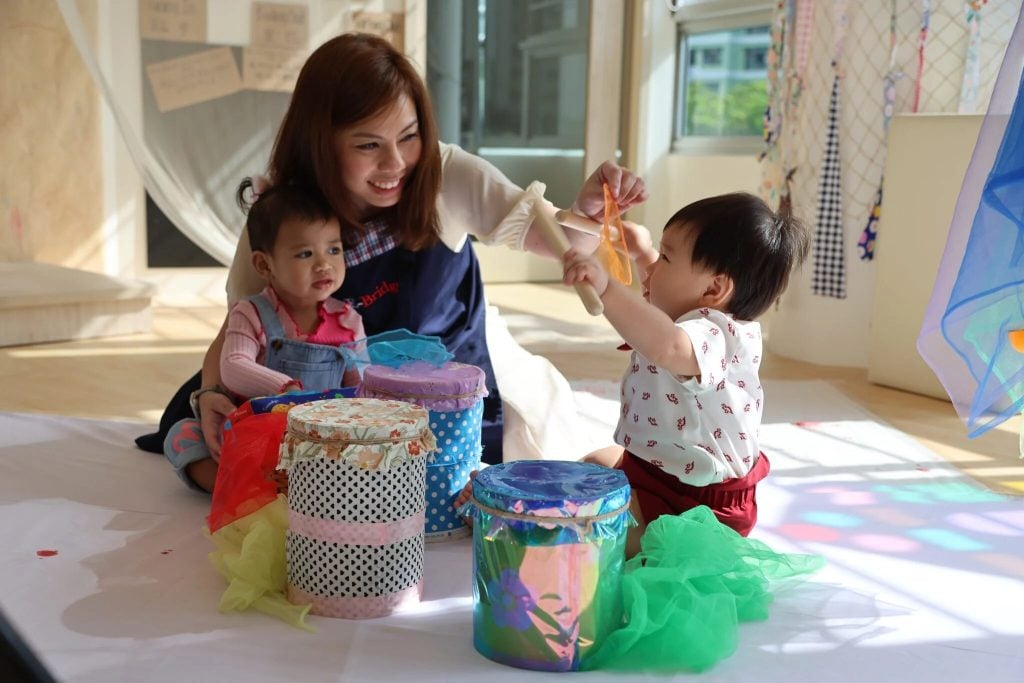
Children communicate in many ways, through drawing, building, movement, storytelling, and more. By offering diverse materials and creative opportunities, we support multiple forms of expression. This honours each child’s unique voice and strengthens confidence in sharing ideas.
Multilingualism
Language development begins early. Our bilingual environment supports children in building confidence in both English and their Mother Tongue, helping them communicate clearly while strengthening cultural awareness and identity.
Environment
A secure and responsive environment supports emotional well-being and social growth. Our educators provide attentive care and thoughtful guidance, creating spaces where children feel safe to explore, interact, and develop independence at their own pace.
Benefits of Reggio Emilia for Children
The Reggio Emilia approach supports children’s growth in ways that extend beyond academic preparation. By focusing on inquiry, relationships, and meaningful experiences, it nurtures well-rounded development during the early years.
Benefits for School Readiness
Children develop strong foundations in language, early numeracy, and critical thinking through project-based exploration. Instead of memorising information, they learn how to question, investigate, and make connections. This ability to think independently prepares them to adapt confidently to new learning environments in primary school.
Social Emotional Development
Through collaboration and dialogue, children learn to listen, negotiate, and express their thoughts respectfully. Working on shared projects encourages empathy and mutual understanding. In a Reggio Emilia preschool, relationships are prioritised, helping children build emotional security and positive peer interactions.
Benefits for School Readiness
Children develop strong foundations in language, early numeracy, and critical thinking through project-based exploration. Instead of memorising information, they learn how to question, investigate, and make connections. This ability to think independently prepares them to adapt confidently to new learning environments in primary school.
Creativity and Problem Solving
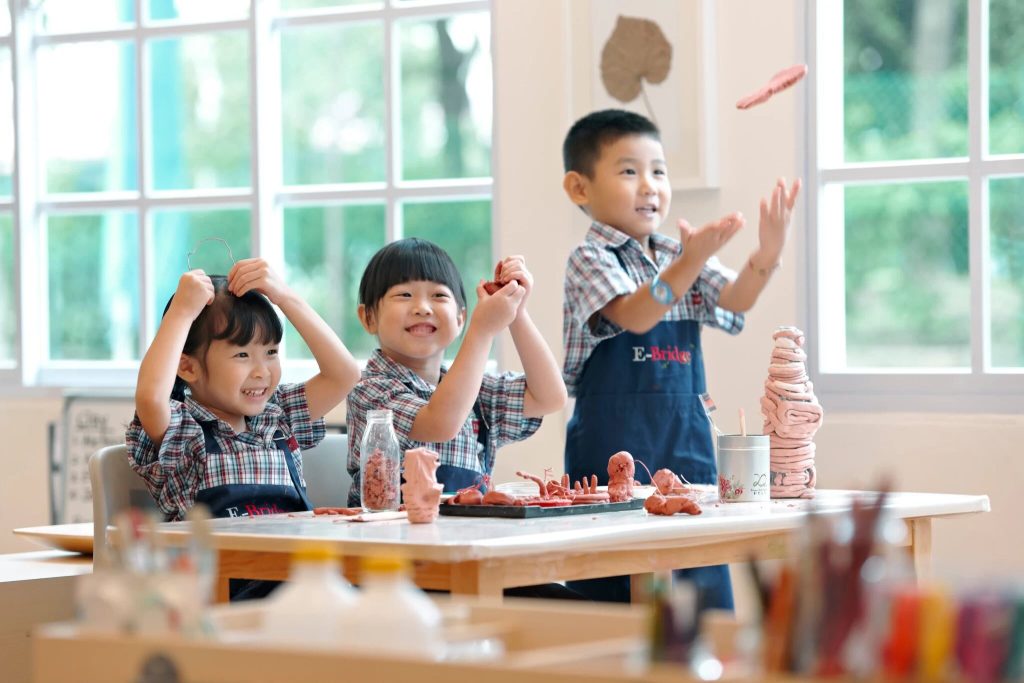
Open-ended materials and inquiry-based projects invite children to experiment and test their own ideas. They learn that challenges are opportunities for discovery rather than obstacles. This nurtures creative thinking and resilience, skills that remain valuable throughout their educational journey.
How We Practice Reggio Emilia
At E-Bridge, the Reggio Emilia approach is not applied as a fixed template. It is interpreted thoughtfully within our local context, guided by children’s interests, professional observation, and meaningful collaboration with families.
Our Interpretation of This Approach
We view the Reggio Emilia approach as a guiding philosophy rather than a scripted programme. While children’s questions and interests shape learning experiences, educators provide structure and intentional guidance to ensure balanced development across key learning areas. Inquiry is purposeful, not incidental, and projects are carefully scaffolded to deepen understanding over time.
Role of Educators as Co-Learners
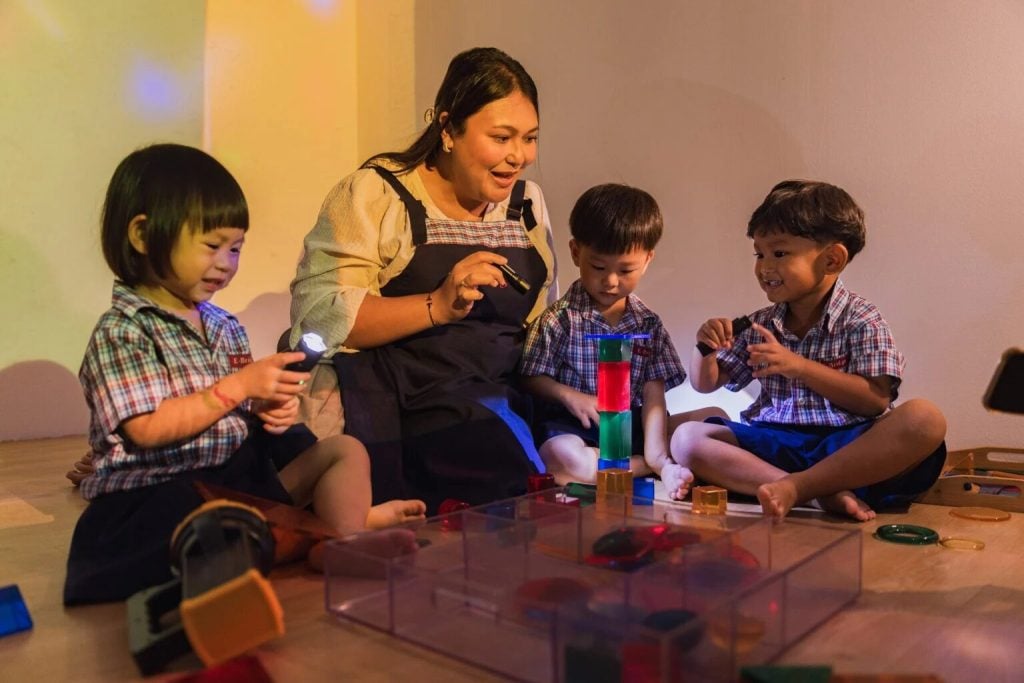
Educators take on the role of co-learners alongside children. They observe closely, listen attentively, and pose thoughtful questions that extend thinking. Instead of delivering ready-made answers, they guide children to explore possibilities, test ideas, and refine their understanding through discussion and experimentation.
Documentation and Reflection Practices
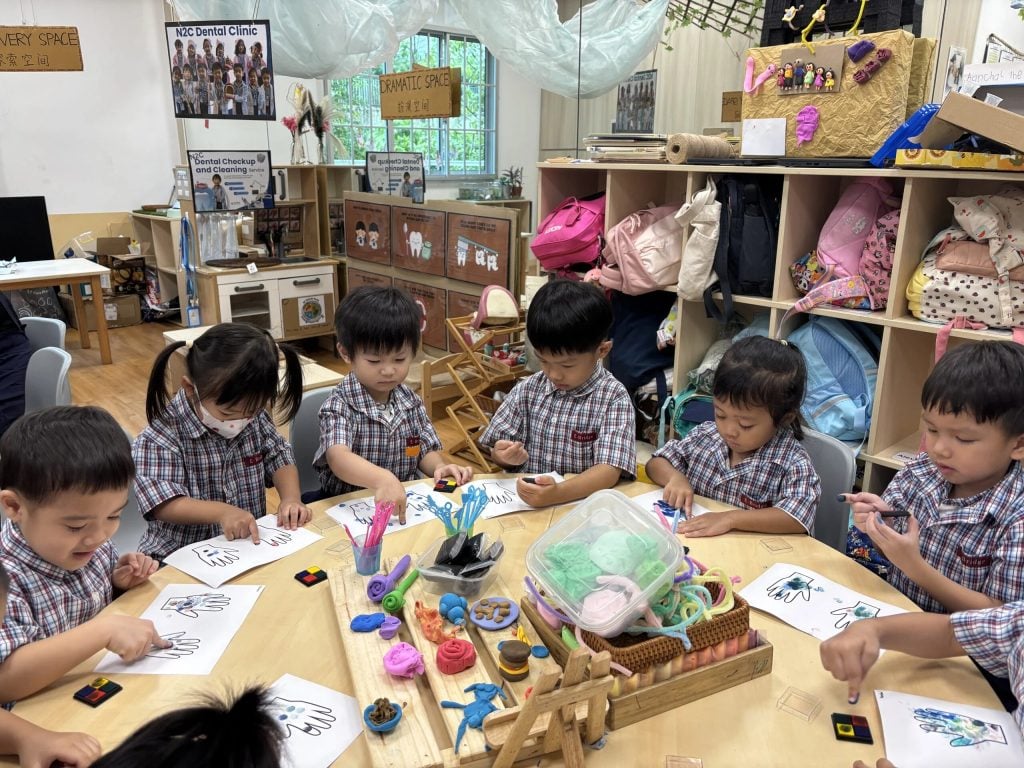
Documentation plays an essential role in daily practice. Conversations, drawings, constructions, and project work are recorded to make learning visible. These records help educators reflect on children’s thinking processes and plan next steps thoughtfully. Documentation also strengthens partnerships with families, offering insight into how ideas evolve.
What to Look for in a Preschool Using This Approach
In a preschool inspired by this philosophy, parents may notice open-ended materials, collaborative projects, and displays that showcase children’s thinking rather than polished end products. Classrooms often feel calm, purposeful, and rich in conversation. The presence of documentation, reflective dialogue, and sustained project work are key indicators of an authentic Reggio Emilia preschool environment.
Frequently Asked Questions
What is the Reggio Emilia approach in simple terms?
The Reggio Emilia approach is an early childhood philosophy that sees children as capable, curious learners. Instead of relying on fixed lesson plans, learning grows from children’s interests, questions, and experiences. Educators guide exploration thoughtfully, helping children build understanding through discussion, collaboration, and hands-on inquiry.
How is the Reggio Emilia approach different from traditional teaching methods?
Traditional approaches often follow predetermined themes and outcomes. In contrast, the Reggio Emilia philosophy encourages project-based learning that evolves from children’s ideas. Educators observe, document, and extend thinking over time, allowing children to explore topics in greater depth rather than moving quickly from one subject to another.
Is the Reggio Emilia approach suitable for children in a preschool in Singapore?
Yes. The philosophy supports bilingual development, social skills, and early literacy in ways that align well with Singapore preschools. While rooted in Italy, its focus on inquiry, relationships, and meaningful learning experiences makes it adaptable to local educational frameworks and cultural settings.
How does this approach prepare children for primary school?
Children develop strong foundations in communication, collaboration, and critical thinking. By learning how to question, reflect, and solve problems, they build confidence that supports a smoother transition to primary school. The emphasis on independence and self-expression also strengthens school readiness.
What should parents look for when searching for a Reggio Emilia preschool?
Parents might find themselves wondering, “Is this the right preschool near me for my child?” In a Reggio-inspired setting, look for classrooms with open-ended materials, visible documentation of children’s work, and educators who engage children in thoughtful dialogue. Sustained project work and collaborative exploration are key indicators.
Are preschool fees higher for Reggio-inspired programmes?
Not necessarily. Preschool fees vary depending on the provider and available subsidies. The Reggio Emilia philosophy focuses on how children learn rather than positioning itself as a premium model. Families are encouraged to review fee structures and available support to make informed decisions in selecting the right preschool in Singapore.
Experience a Reggio Emilia inspired preschool that empowers children to think, explore and express themselves confidently.